
Quick Notes
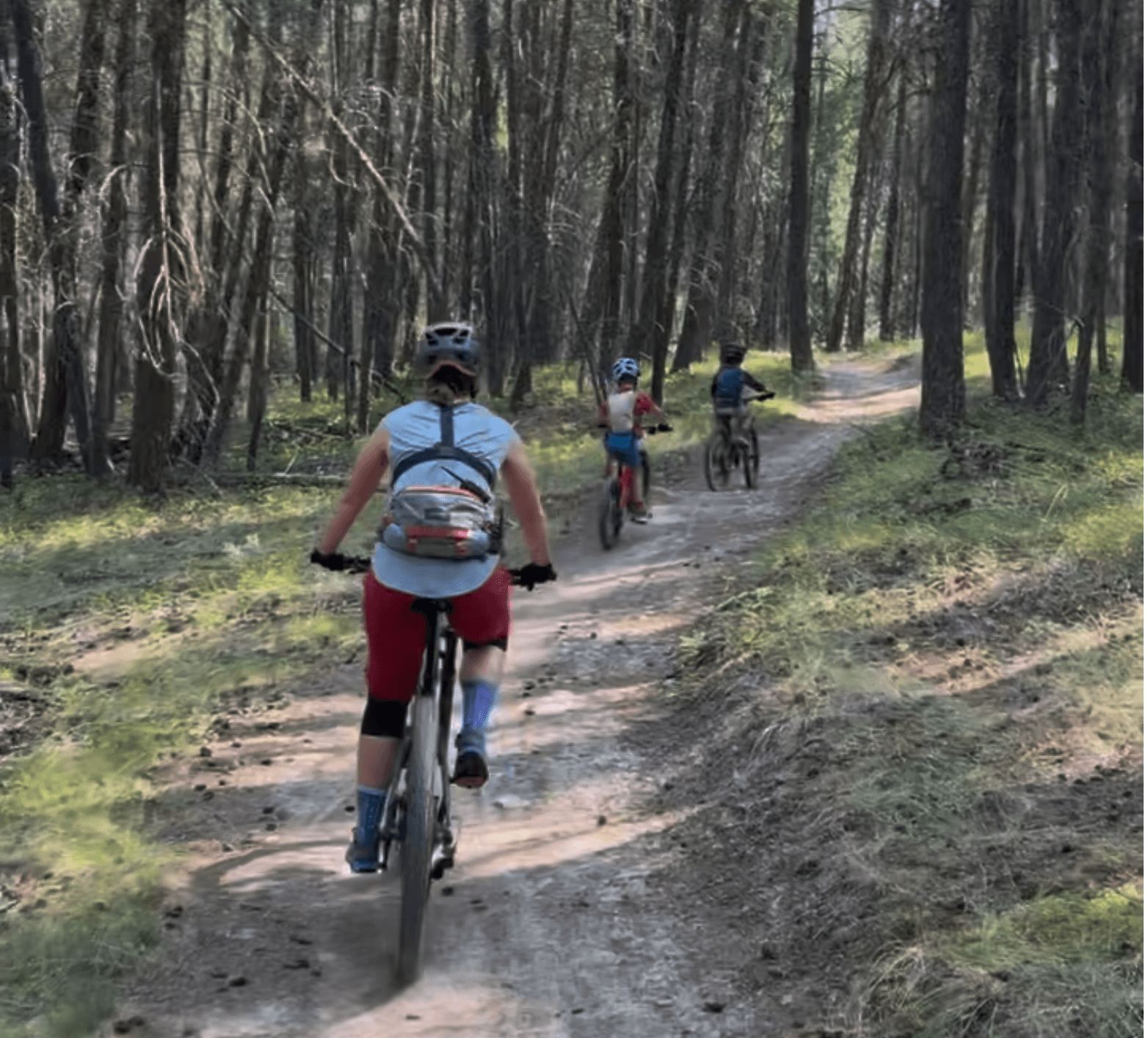
Climbing with kids gets easier once the bike is set up right and the hill becomes a game. A seat that's too low, a gear that's too hard, and no reason to keep pedalling are the three things that turn a gentle climb into a meltdown. Fix the first two in the parking lot, then use the games mentioned below on the trail. Most kids stop noticing the hill entirely.
- Ages: These games work across a wide range — roughly 5 to 14, adjusted for ability
- When to use: Any ride with sustained climbing, even gentle grades
- Gear check time: 5 minutes in the parking lot before you roll
- Power-ups: Optional, but effective. A small bag of gummies weighs almost nothing
Getting the Bike Ready Before the First Climb
Games and encouragement go a long way, but if the bike is fighting a kid on the way up, no amount of fun will fix that. A few minutes in the parking lot sorts most of it out.
Seat Height Makes a Bigger Difference Than You'd Think
This is the most common thing I see holding kids back. When a seat's too low, they can't get a full pedal stroke, so they're burning more energy than they need to and tiring out faster.
For climbing, you want a slight bend in the knee at the bottom of the stroke — not locked out straight, but close to it. Most kids ride with their seats low because they want to touch the ground while sitting, which makes sense for confidence on descents. The fix is simple: bump the seat up a notch or two for climb-heavy rides. They can still get a foot down, and they will get more power out of each stroke while they're at it.
Shift Before the Hill, Not During It
Kids tend to hit a climb in too hard a gear, then have to stand up and muscle through. That works for short punchy sections, but on anything sustained, they'll burn out fast.
Try this instead: shift while there's still momentum, before the gradient kicks in. I point out the hill from a distance and give a heads-up. Once they're mid-climb and grinding, shifting gets awkward and confidence drops. Getting into the right gear early means they arrive at the bottom already set up — calmer, more in control.
Finding the Right Gear (Without Turning It Into a Lesson)
"What gear should I be in?" comes up in most lessons I run. The answer is: whatever lets you pedal comfortably for a long time. If the pedals are spinning too easily, go harder. If you're grinding and your legs are screaming, go easier. The right gear changes as the terrain changes, and kids figure that out pretty quickly once they're paying attention to it.
None of this needs to be a formal talk. A quick seat tweak, one gear reminder at the bottom of the first climb, and a simple cue about pedalling — that's usually enough to set the ride up well.
Making the Climb Disappear
Once the bike is sorted, the other half of the equation is keeping young minds busy on the way up. In my experience coaching and riding with my own boys, the moment the climb becomes a game, it stops being a climb.
High Fives for Trees and Branches
This one's been a Trail Rippers staple this year. On flat and gentle uphill sections, I call out trees or low branches and challenge the kids to reach out and high five them as they roll past.
It sounds like nothing, but it's doing a lot of work quietly. Kids have to judge distance and timing to connect with the branch, which builds hand-eye coordination. They also learn to modulate their brakes — slowing down just enough to line up the high five without stopping is trickier than it sounds. I keep this one to flat or slight uphill terrain where speeds are low and there's time to react. For kids who aren't comfortable taking a hand off the bar yet, a wave of a few fingers counts. The full high five comes when it feels right.
Eye-Spy and Scavenger Hunts
Before heading out, I give the kids a list: a certain leaf shape, a fallen log, a mushroom, a specific tree. If the group knows their trees, "first one to spot a birch" works every time. Counting games are good too — how many roots between here and the next bend? It keeps eyes up and scanning the trail, which is useful on its own, and it completely distracts from tired legs.
Power-Ups at the Top
Kids respond well to a clear goal. I tell my riders there's a "power-up" waiting at the top — in Trail Rippers terms, that's a couple of gummies. It's hard to explain how fast little legs move when there's a power-up on the line.
Give Them a Mission
On wider sections, a race works too: "Who can beat me to that tree?" or "First one to the next corner!" Sometimes the reward doesn't need to be food at all. Building anticipation works just as well — "let's see if we can find a lookout, a fort, or a giant stump to sit on" gives kids a mission. Arriving somewhere that feels special makes the whole climb worth it.
Front Wheel Pop Challenge
For kids who've got their basics down and are ready for something more technical, I challenge them to pop their front wheel over every root and rock on the trail. Leading by example — "I did it, can you?" — taps into that natural urge to keep up with (or outdo) the coach or parent. It reframes tricky trail features as targets rather than obstacles, and I've watched kids who were visibly nervous about roots completely change their approach once it became a competition.
Puddle Standing — the Post-Rain Special
After a rainy day, the trail is full of puddles, and kids love them. The challenge: stand up on flat pedals and roll through without pedalling. On a slight uphill, this is sneakily hard — they have to build enough momentum before the puddle to carry them through. It teaches balance, momentum management, and body position, while they think they're just trying to get muddy.
A Few More Games Worth Knowing
These mix well into any ride:
- Slow race: See who can go the slowest without putting a foot down. It's a great drill for balance and brake control, and kids find it entertaining. It's also a nice way to level the playing field with kids who ride faster than others — since it's about control, not speed, everyone's on equal footing.
- Follow the leader with a twist: Call out a body position to hold — "elbows out!", "look ahead!", "attack position!" — and everyone copies. It sneaks in technique without it feeling like a drill.
- Count the switchbacks: On longer climbs with turns, have kids count each one out loud. It gives a sense of progress and breaks the climb into manageable pieces.
The Top of the Hill Is Worth Something
The climb is never really the obstacle. Tired legs are temporary. What stays with a kid is the feeling of making it to the top — especially when they got there by popping over roots, spotting birch trees, and racing for a power-up.
When climbing feels like play, kids build endurance and confidence without realizing they're working on either. And the next time that hill shows up, they won't be dreading it. They'll be wondering what game comes next.