Still Learning: Takeaways from My Jumps + Drops Course
Last month I spent two days at Silver Star Bike Park taking a GSMBC course on intro to jumps and drops — part skills upgrade, part coach development. And I'll put it plainly: I felt like a beginner again. That's exactly what I was hoping for.
I came to a realisation earlier this year that coaching isn't a destination (yes, I know how that sounds). It's not a badge you earn once and then coast on. It keeps evolving. The most experienced coaches I know are still adjusting things every season, and honestly, I find that encouraging. Every time I coach, I get to try something, learn from it, and go again. This course reminded me of that in the best way.
Here are the big takeaways from those two days — and the few weeks since.
Getting Humbled on Purpose
As riders progress, their skills have to progress with them. What worked for me as a beginner doesn't serve me anymore as a more advanced rider. My body position, my pressure and control, my timing — all of it needs to keep evolving. This course made that clear, fast, in a few specific areas.
Body Position
I picked up small adjustments that made a noticeable difference. Keeping the arches of my feet centred over the pedals improved my balance. Standing taller and stacking my bones through the legs gave me more traction than collapsing into a deep crouch. We also worked on a proper ready position — bending at the elbows while keeping the legs relatively straight. It sounds backwards, but it gives more range of motion, more traction, and it's less fatiguing over a full day of riding.
I tend to get low and compressed, and on rough terrain I noticed I wasn't leaving myself anywhere to go. Every time I pick up an adjustment like this, I have to remind myself: slow down before speeding up. The skill has to live in my body before I can trust it at pace.
Drops
I learned three distinct skills that go into executing a drop — and one of them I'd never worked on before. The way it was framed has stuck with me: think of it like a dial, where you're adjusting the intensity of one or two of those factors depending on the drop's size and shape, your speed, or where you want to land.
I'm usually confident on drops. Adding that third factor slowed me right down. I had to think carefully about something that used to feel automatic, and I felt like a beginner for a while. That was fine. Anything that helps me land more smoothly is worth feeling a little rusty for.
Jumps
This was almost entirely new ground for me. I'd never taken a lesson on jumps before, so this was my first structured breakdown of what's actually happening — seven sections in total. My biggest struggle is timing my compression, and I'll say that plainly. One thing that surprised me: bigger jumps are often easier than smaller ones, even though they look more intimidating. And "just go faster" is almost never the fix. Most of the time, it comes down to technique and timing.
What It Taught Me About Coaching Kids
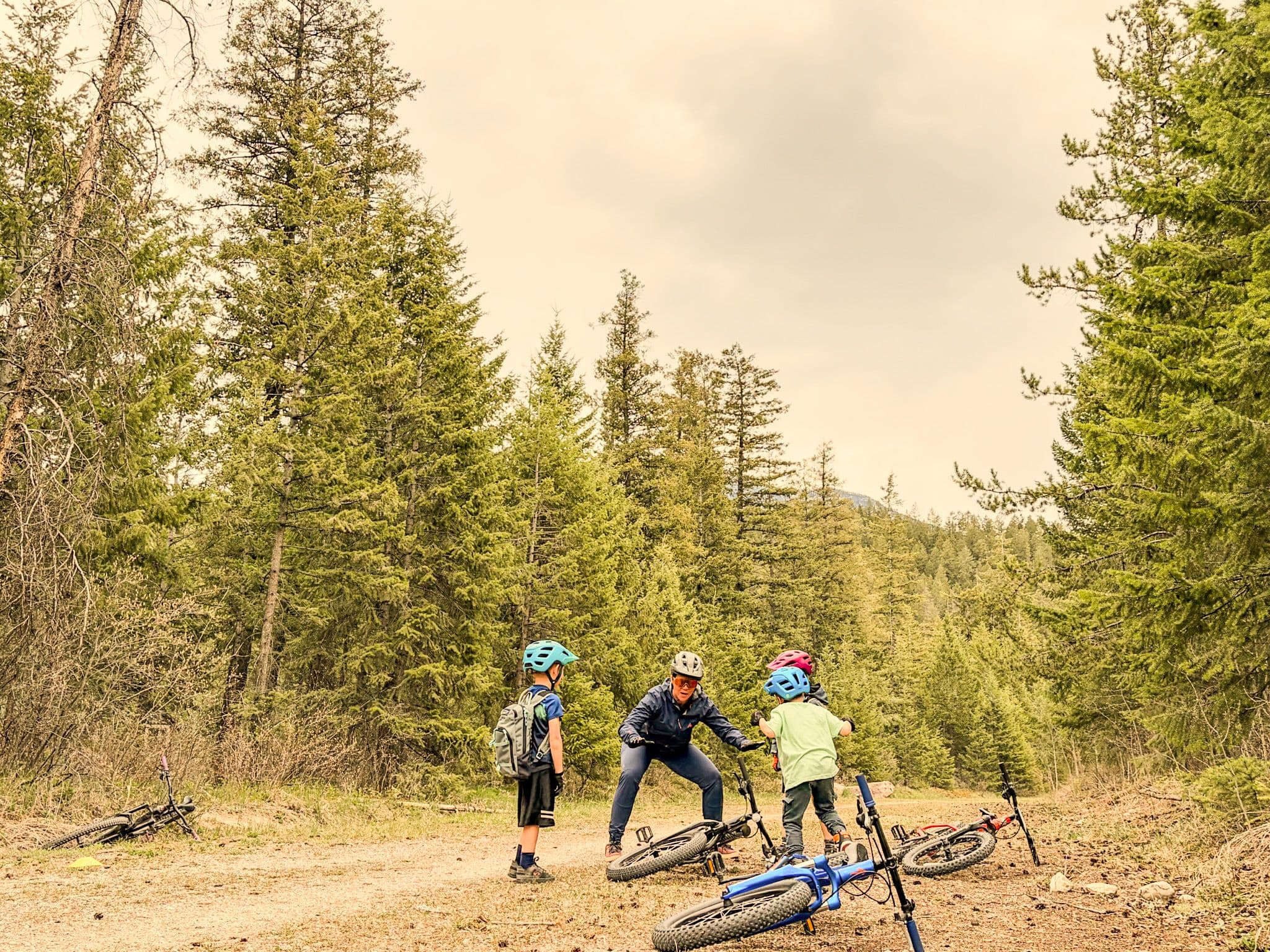
Being coached on my own riding was only half of it. The other half was watching how an excellent instructor operates and picking up things I'm already bringing back to sessions with your kids.
The Way Feedback Lands Matters
Feedback should be about the riding, not the rider. There's a difference between "next time I want you to do X" — which puts pressure on the rider to meet my expectations — and "great job staying neutral, next time try this." The second framing makes it about the rider. It gives them permission to experiment instead of perform. A small shift, but it changes how a rider receives what you're telling them.
Specific Beats Vague, Every Time
"Good job braking" doesn't give a rider anything to work with. "You didn't skid because you kept even pressure on both brakes — try it again" does. I'm recommitting to that level of specificity in every session. Vague feedback is easy to give and almost useless on the trail.
Sometimes the Best Feedback Is Just: Go Again
Not everything needs to be dissected. Sometimes a rider does something well and the right move is to say so and send them back up. Repetition builds consistency. That also takes patience — letting riders show me they've got it a few times before moving on.
Position Yourself Where the Kids Are
Standing near the feature or the cones means feedback happens in real time, without yelling across the trail. While I'm talking with one rider, everyone else keeps practising. And sometimes pointing out what another rider is doing is the clearest feedback of all — kids respond well to seeing it in front of them.
Progression Can Be as Simple as Moving a Cone
We spent half a day on the same drop at Silver Star. Just by shifting cones closer to or farther from the landing, it became a different challenge each time. Nobody got bored. Everybody got better. It let us work the same technique in different ways without switching features — a simple tool I'm already using more.
Why This Keeps Mattering
Being the only coach at Trail Rippers is a lonely job sometimes. There's no one to compare notes with at the end of a session, no one to ask "how would you explain this to an eight-year-old?" Courses like this are where I find my people — riding alongside coaches I don't normally ride with, watching how they teach, getting feedback on my own riding, and being reassured that what I'm doing is working. It fills a gap I don't always know how to fill on my own.
It also keeps me from getting too comfortable. It's easy to keep teaching what you already know well. It's more useful — for me and for every kid I coach — to keep putting myself in situations where I don't know something yet.
Quick Notes
Who this course is for: coaches and advanced riders wanting a structured breakdown of jumps and drops technique
Where: Silver Star Bike Park, run through GSMBC
Format: two full days, split between personal skill development and coaching methodology
What I'm bringing back: refined feedback language, cone-based progression drills, and a proper ready position I'm already cuing in sessions
Our take: if your kid comes home this season talking about a new drill or a different way I explained something, I didn't invent it — I borrowed it from people who know more than me, which is exactly the point
So if something sounds different in my coaching this season — a new cue, a different drill, a game involving cones — I definitely didn't come up with it on my own. I'm still learning. I plan to keep it that way for as long as I'm coaching.
Thanks for trusting me with your kids while I do.
— Coach Marie